Introduction:
Facing History and Ourselves is a course that taught
me civic responsibility and tolerance through the use of history, mainly the
Holocaust. The class focused on historic events and situations that have shaped
the world we live in today. We looked at the injustices experienced by many
different types ethnic groups experienced in the past from Blacks, to Jews,
Women, and to even Teenagers. At the same time, we evaluated ourselves as a
person and had group discussions to share our ideas and opinions on certain
situations and events. The first time I had heard about this course, I didn’t
know much about it. When meeting with my guidance counselor at the end of
sophomore year, I was told about it. My guidance counselor recommended it and
told me Mr. Gallagher was very passionate about this course. After taking it, I
have found this course extremely inspirational. I was very impressed by the
course’s ability to challenge students to think about their past, present, and
future. I know personally, it challenged me to evaluate my actions and
opinions. Through looking at what has happened in the past, it makes us think
about our decisions and what we want to do with ourselves. The class is an
opportunity to reinvent yourself through civic responsibility and tolerance.
I’ve lived in Bangladesh until the age of six so I
have a different perspective from some students my age. I always struggled to fit in and wanted to be
like everyone else around me. Doing so, I was also diminishing my own culture.
However, this course has helped me in define myself as a person and made me
look at myself in many different ways.
How Facing History and Ourselves has benefitted me:
Facing History and Ourselves was an extremely
meaningful class to me. Never in my high school career have I ever had a class
like this one. A class that I will remember for the rest of my life. A class
whose teachings won’t be forgotten after a year; what I learned in this course
will stay with me for the rest of myself. From the beginning, the course made
me question who I really am and think about the person I want to be. Through
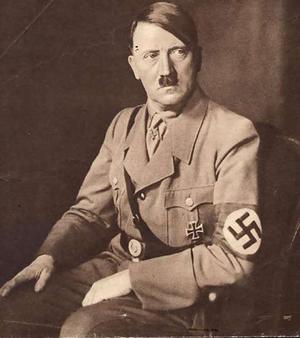
learning about the holocaust and retracing the steps Hitler took in order to
get to such a mass genocide, I have been able to answer that question. Even
though Facing History and Ourselves is the course where I learned how cruel and
heartless prejudice, racism, and segregation are, I learned over the course how
I can help prevent these acts and in doing so I found who I am. As a person I
found my whole life is changed, I will never be a bystander and I will always
embrace who I am. This is how Facing History and Ourselves has benefitted me.

If there’s one thing I benefitted from this course,
it’s learning to NEVER be a bystander.
During the holocaust, every civilian who claimed they had no idea what was
going on, was a bystander. Unfortunately, they are at fault for what had
happened, not just Nazi soldiers and government. If one proceeds to be a
bystander, which is how prejudice can begin and lead to something as terrible
as a mass genocide like the holocaust. However, you don’t necessarily
have to stop the Holocaust in order to not be a bystander; it can be as simple
as standing up for your friend or even a stranger. I remember recently, I was
waiting in line at a grocery store when a couple came in line behind me. The
woman seemed very upset and the man was yelling and cursing at her. I could
feel her pain and embarrassment just looking in her eyes. Even though I am just
teenager and much younger than this couple, I was compelled to say something.
Before taking this course, I would have just minded my business and looked the
other way as if what was happening in front of me didn’t matter. I now
understand that if I had chosen to just be a bystander, my actions would have
the same effect as the man putting down that woman in public. This course has
made me evaluate my actions and properly use my moral compass.
Facing History and Ourselves has also made me feel
comfortable in my own skin. As a teenager I was insecure about who I was and
where I came from. I felt like I stuck out because I didn’t have two parents, I
wasn’t white, or that I wasn’t wealthy. I desperately seeked confirmation from
everyone around me; I wanted to fit in. When I first moved to the United States
at age six, the change in environment didn’t seem such a big deal. As I grew
older, I began to notice the two cultures clashing. I felt like I had one foot
on one boat and the other leg on another boat. I was trying to please my mom by
being the typical Bengali girl who gets good grades and follows a strict and
traditional lifestyle. On the other hand, I had to be the everyday American
teenager with my friends and peers. However, after this course, I have learned
that I just have to embrace myself for who I am. When I witnessed all those
Jews proudly associating themselves as Jews, even if that meant death, I knew I
had to as well. I have to be the real me with everyone. I shouldn’t have to
fake who I am for other people. The Jews could have denied the fact that they
are Jews to avoid inhumane torture and pain but they didn’t. They embraced who
they are and that is something I benefitted from my overall experience in this
course.
There are so many factors to the class I liked from
the movies we watched, the class discussions, and just the general thinking
that the class provoked. I like the way the class was executed. We went from
simpler stories such as “The Bear That Wasn’t” to such an intense and impactful
movie like “The Boy in The Striped Pajamas” and “Freedom Writers”.
 At the very beginning of the course I was excited to
see what it had in store for me. We first read a children’s book called “The
Bear That Wasn’t”. I immediately analyzed the book and tried to figure out what
sort of idea it was trying to prove. The bear was told over and over that he
wasn’t a bear until he started to believe it. It’s representative of how
society lumps things together by things that they have in common. This
discussion was meaningful to me because I have had other people say I’m this or
that to the point where I actually began to believe them.
At the very beginning of the course I was excited to
see what it had in store for me. We first read a children’s book called “The
Bear That Wasn’t”. I immediately analyzed the book and tried to figure out what
sort of idea it was trying to prove. The bear was told over and over that he
wasn’t a bear until he started to believe it. It’s representative of how
society lumps things together by things that they have in common. This
discussion was meaningful to me because I have had other people say I’m this or
that to the point where I actually began to believe them.  Another part of the course showed us the movie “The
Freedom Writers”. I really enjoyed this movie because it was a bit more modern
and relatable. The teacher in the movie had just started teaching a class of kids
that are condemned by the school just because they are expected to fail due to
the history of many classes similar to that one. However, the teacher doesn’t
let others stop her from providing these students with a proper education. She
manages to get through to each and every student and in the process making a
very personal connection to each and every one of them. She shows them the
extent of their intelligence and that what they’ve been through has meaning and
should be shared with the world. They are stereotyped for their appearance and their
performance in school. This movie was meaningful to be because it taught me
that everyone has a story to share to the world and that no one should be
ignored just because they may appear in a certain stereotypical way.
Another part of the course showed us the movie “The
Freedom Writers”. I really enjoyed this movie because it was a bit more modern
and relatable. The teacher in the movie had just started teaching a class of kids
that are condemned by the school just because they are expected to fail due to
the history of many classes similar to that one. However, the teacher doesn’t
let others stop her from providing these students with a proper education. She
manages to get through to each and every student and in the process making a
very personal connection to each and every one of them. She shows them the
extent of their intelligence and that what they’ve been through has meaning and
should be shared with the world. They are stereotyped for their appearance and their
performance in school. This movie was meaningful to be because it taught me
that everyone has a story to share to the world and that no one should be
ignored just because they may appear in a certain stereotypical way.
The most tear jerking movie for me was “The Boy in
the Striped Pajamas”. It’s about two boys whose lives are complete polar
opposites. The two boys, one the son of a commandant and the other a Jew
in a labor camp, come face-to-face at a barbed wire fence that separates and
eventually intertwines their lives. The two form such a powerful friendship
that Bruno, the commandant’s son, is willing to risk getting caught in order to
help the little Jew boy find his father. However, at the end, both the boys,
Bruno accidentally, are forced into a chamber and gassed to death. This movie
was very meaningful for me because it taught me to treat others how I would
want to be treated. Bruno did exactly that. He didn’t care that his friend was
a Jew and he was supposed to hate him. He treated the Jewish boy just like a
friend, and that is what they became at the end.

Overall, Facing History and Ourselves has been by
far one of the best experiences I have ever had in my High School career. This
class has been an amazing experience and I am extremely glad I was able to take
it. This class has helped me define who I am. It has also shown me many
aspects of life and what I should improve of myself. I recommend this class to
anyone I know.
Works Cited
“Adolf Hitler”. Google
Images. Online Image. 22 May 2013
“Freedom Writers”.
Wikipedia. Online Image. 22 May 2013
“The Bear That Wasn’t”.
Google Images. Online Image. 22 May 2013
“The Boy in the Striped
Pajamas”. Wikipedia. Online Image. 22 May 2013
“The Holocaust”. Google
Images. Online. 22 May 2013

No comments:
Post a Comment